
- USBDC was used in a live transaction between U.S. Bank entities in North America and Europe.
- The pilot tested issuance and token controls through the bank’s own Digital Asset Platform.
- Potential applications include liquidity management, collateral mobility and cross-border treasury operations.
- U.S. Bank has not announced a commercial rollout or customer transaction volumes.
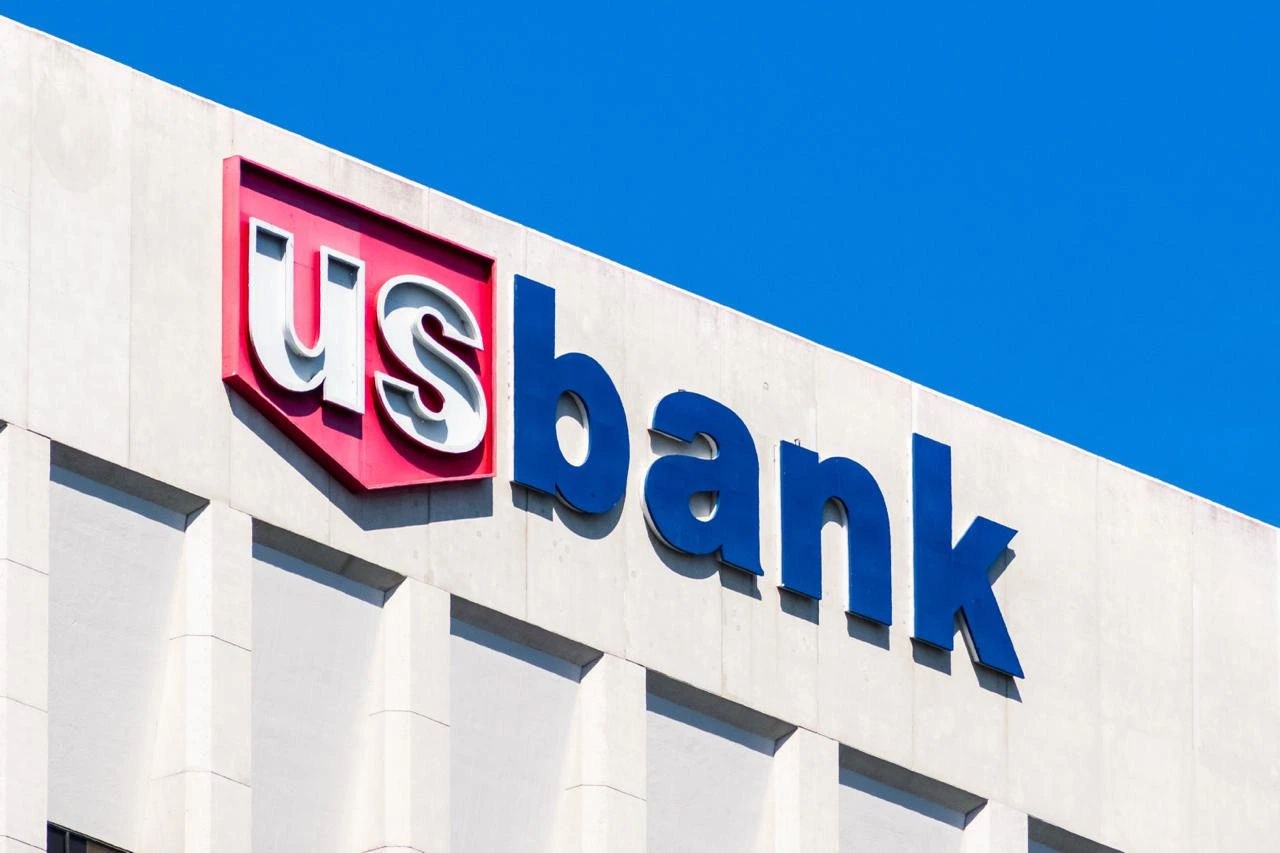
U.S. Bank has completed a live cross-border transaction using USBDC, its proprietary dollar-backed stablecoin, moving value between bank entities in North America and Europe. The September 9 transaction ran on Stellar and marked a live test of infrastructure the bank has been developing for tokenized assets. Rather than positioning USBDC as another crypto-market stablecoin, U.S. Bank is exploring whether tokenized dollars can improve the movement of institutional cash, collateral and liquidity.
USBDC Puts U.S. Bank’s Own Infrastructure to Work
The stablecoin is only one part of the experiment.
Behind USBDC sits U.S. Bank’s internally developed Digital Asset Platform, built to issue, manage and transfer tokenized assets while interacting with blockchain networks. The latest transaction effectively gave that infrastructure a live cross-border test.
During the pilot, the bank evaluated several functions needed to operate tokenized money:
- Minting: creating USBDC backed by U.S. dollars.
- Payments and redemption: moving the token and converting it through its lifecycle.
- Freezing: stopping specified tokens when required.
- Clawback: providing a mechanism to recover assets under defined circumstances.
Freeze and clawback capabilities are especially relevant to a bank-issued asset. Regulated institutions need tools to respond to fraud, sanctions requirements, legal orders and operational errors. A digital dollar designed for banking therefore has different requirements from a crypto asset built around irreversible transfers.
The platform also gives U.S. Bank a foundation that could extend beyond USBDC. If the bank later tokenizes other forms of financial assets, the underlying issuance and management infrastructure is already being tested.
Why Treasury Could Matter More Than Consumer Payments
The strongest use case may not be sending a payment slightly faster. It may be changing when corporate liquidity can move.
Cross-border treasury operations remain constrained by banking hours, settlement windows and the need to coordinate cash across jurisdictions. A multinational company may hold money in several accounts partly because it cannot always reposition that liquidity exactly when it needs it.
Tokenized money creates another option.
U.S. Bank specifically identified enhanced liquidity management, collateral mobility and cross-border treasury operations among the applications it is evaluating for the technology.
Collateral mobility is particularly interesting. Financial institutions and large companies sometimes need to move assets quickly to meet margin or funding requirements. Reducing the time between initiating and completing that movement could lower the amount of capital that needs to remain pre-positioned.
The economic benefit, if the model works at scale, would therefore come from more than payment speed. It could come from using cash more efficiently.
Stellar Gives USBDC an Always-On Settlement Layer
The transaction was executed on Stellar, extending an existing relationship between U.S. Bank and the Stellar Development Foundation.
U.S. Bank highlighted near-instant settlement, global reach and transaction costs below one cent among the network characteristics relevant to the project.
Using a public blockchain also gives the bank an always-available transaction layer. Unlike conventional payment infrastructure tied to operating windows, Stellar can process transfers continuously.
For institutional finance, however, blockchain uptime is only one piece of the equation. Accounting, compliance checks, liquidity provisioning and internal approval systems also need to support activity outside normal hours before 24/7 settlement becomes genuinely useful.
The USBDC pilot addressed part of that challenge by connecting the blockchain transaction with U.S. Bank’s core finance, risk, compliance and operations infrastructure.
Why Would a Bank Need Its Own Stablecoin?
USDC and USDT already provide dollar-denominated liquidity across blockchain networks, so USBDC raises a strategic question: why issue another digital dollar?
Ownership changes the economics.
When a bank’s customer converts deposits into a third-party stablecoin, the issuer of that stablecoin controls issuance, redemption and the reserves supporting the asset. A proprietary token potentially allows U.S. Bank to provide blockchain-based settlement while retaining a larger part of the financial relationship.
It could also integrate the token directly into products already used by corporate treasury clients.
That creates a different competitive model from crypto-native stablecoins. USBDC does not necessarily need to become a widely traded asset on exchanges to be useful. It could instead function as specialized settlement money moving between businesses, accounts and financial institutions that already interact with U.S. Bank.
Its success would then depend less on crypto trading liquidity and more on whether clients actually save time or capital by using it.
The Commercial Test Still Lies Ahead
A successful transaction proves that U.S. Bank can issue and move USBDC. It does not establish that the system is economically superior to existing treasury infrastructure.
The bank has not disclosed a commercial launch date, transaction volume, number of prospective corporate users or a cost comparison with conventional cross-border settlement. Its announcement describes the technology’s future applications as areas still under exploration.
Those gaps provide clear benchmarks for the next phase.
If USBDC reaches customers, settlement volume, transaction costs, corporate adoption and liquidity savings will be more meaningful than the number of additional pilots. Activity outside traditional banking hours could be especially revealing because it would show whether always-on settlement is solving a problem that existing rails cannot address as efficiently.
The competitive question could then extend well beyond U.S. Bank. If tokenized deposits and bank-issued stablecoins deliver measurable treasury savings, large banks will have to decide whether to issue their own digital dollars, integrate tokens from external issuers, or support both models.
For USBDC, the technology has now moved value across the Atlantic. The next test is whether clients have a reason to move their money the same way.
Credit: Source link